Stacking Guitar Pedals
Pedal stacking refers to engaging two, typically gain-based, guitar pedals at the same time. The idea is to get the circuits interacting with each other, creating new and hopefully pleasing tonalities. For a lot of players this might seem counterintuitive. If you buy a high-quality drive pedal, don’t you just want to hear that pedal and nothing else? But it’s really no different than cooking. A great meal, like great guitar tone, is created through the combination of high-quality ingredients that can each stand on their own as delicious little snacks. But when you combine ingredients in the proper ratios, when the temperature is right, and the timing is spot-on, you get the perfect dish. Something that’s greater than the sum of its parts. Tone works the same way.
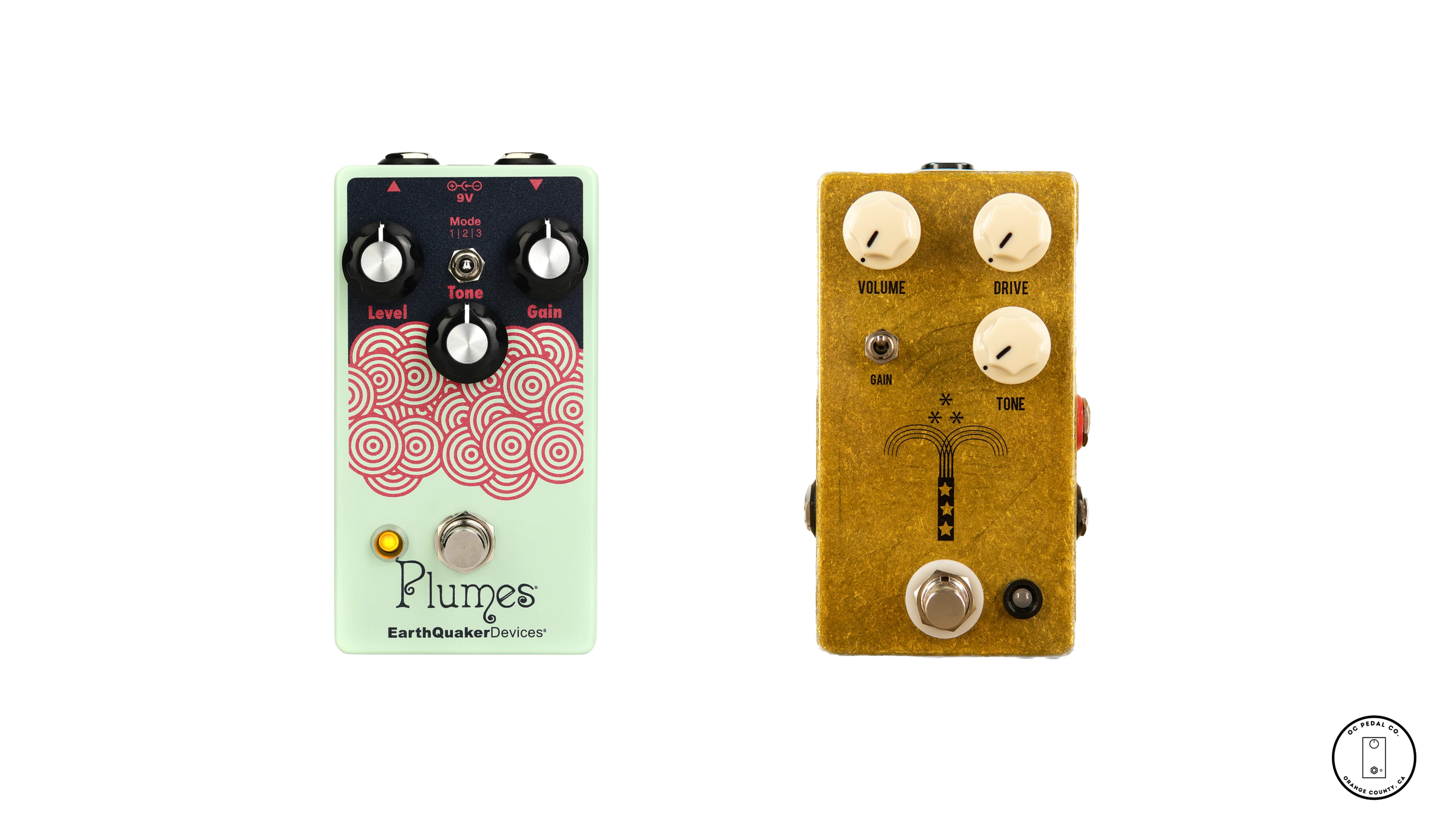
Two of my favorite pedals to stack are the JHS Morning Glory and EarthQuaker Devices Plumes. Both pedals sound incredible and are useful on their own. I like the Morning Glory as an always-on type of pedal with the volume and gain set at about 11 o’clock. It cuts a little low end and is super reactive with my guitars volume pot. The Plumes is the next pedal in the chain, and when I engage it while the Morning Glory is already on, I get this wonderfully heavy distortion tone with strong mids. I typically set the Plumes with the volume at 11 o’clock and the gain at 12 or slightly under.
Amp settings matter. The more gain from the amp, the more your signal naturally compresses. Your pedal settings will vary based on the amp and the amount of amp gain. I love using a Vox AC30 with the Morning Glory/Plumes combo.
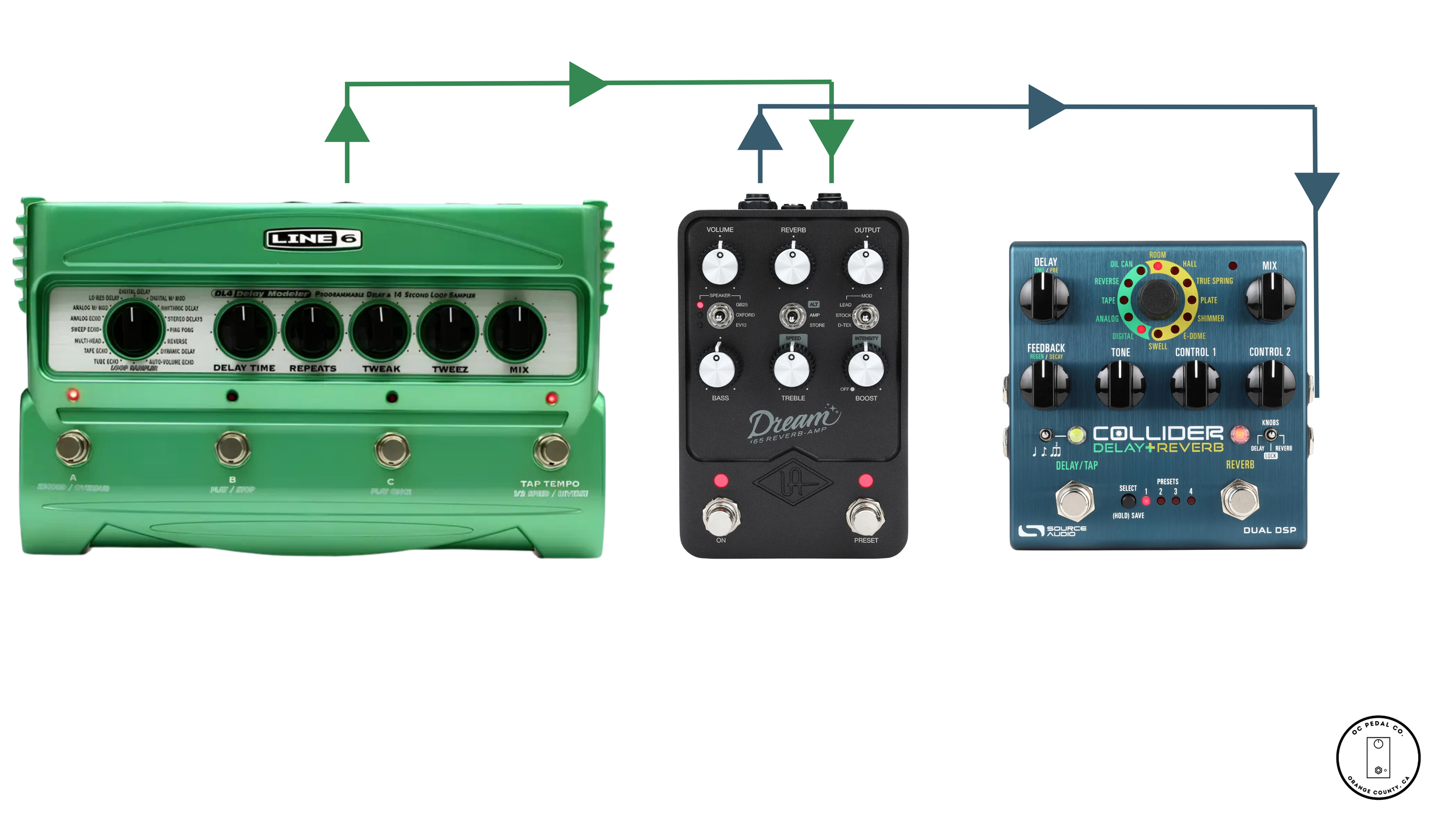
While stacking usually refers to combining overdrive and distortion pedals, you can also get interesting effects by stacking delays. You can get some cool results running delay pedals in series but its not the only effective way of stacking. My favorite delay tricks is running one delay into the front end of an amp and the other in the effects loop of an amp or after an amp modeler. This method creates a ton of dimension! The delay going into the amp’s input will be affected by the amp’s natural breakup and saturation. I love using the old DL4 by Line 6 for this since the algorithms aren’t as pristine as newer delays anyway. I place the Source Audio Collider after my modelers or in the effects loop of an amp for pristine, studio-quality delays. Running this set up in stereo is like heaven on earth! Also, you should not be afraid to experiment with different delay times and note subdivisions between the two units.